Tea, Borders And A Chinese Village On A Thai Ridge
A Yunnanese town founded by a stranded army, the royal villa at Doi Tung, and the point where three countries meet on the Mekong.
Doi Mae Salong exists because a defeated Chinese Nationalist division crossed into Thailand in 1949 and was never repatriated. Their descendants still live on the ridge, still speak Yunnanese, and now grow some of Thailand's best oolong on the slopes below the town. Signs are in Chinese. Breakfast is steamed buns and tea. It does not feel like Thailand and it is not pretending to.
North of it, Doi Tung holds the royal villa and gardens built as part of the same effort that reshaped Ang Khang, and beyond that the Mekong marks the corner where Thailand, Laos and Myanmar meet.
The route
Stop by stop, with the drive between each.
- 1
Chiang Rai
The natural first stop; see Route 10 for what is there.
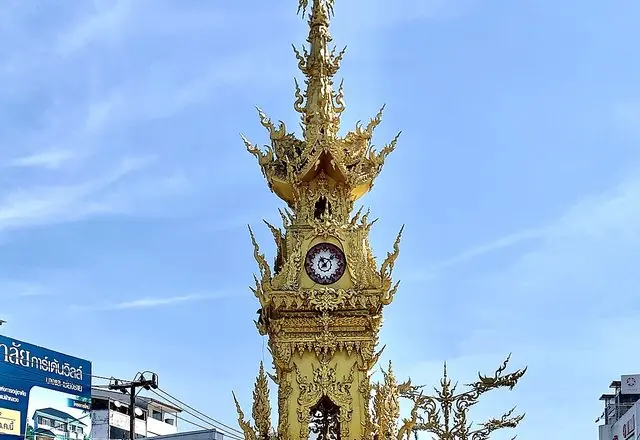
The northernmost city of any size, on the Kok river, founded by King Mangrai in 1262 before he moved his capital to Chiang Mai. Smaller and quieter than Chiang Mai, with a good night bazaar, a clock tower that performs on the hour, and the temples of Chalermchai and Thawan a short drive out.
Wikipedia →Chainwit · CC BY-SA 4.0 3h 08m · 185 km - 2
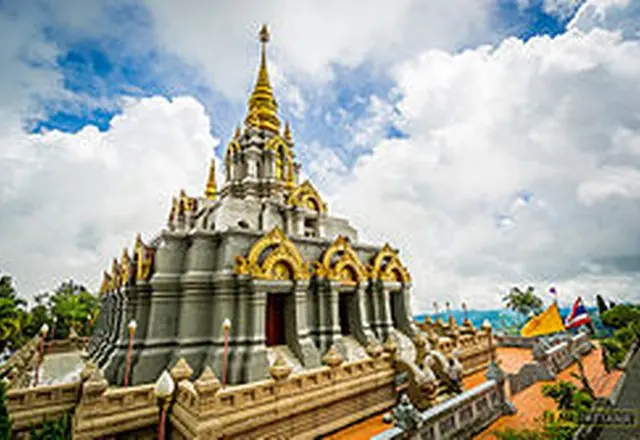
Doi Mae Salong (Santikhiri)
The morning market, the tea houses, and Wat Santikhiri on the ridge above with the whole range laid out behind it. Stay a night if you can; the town empties in the evening.
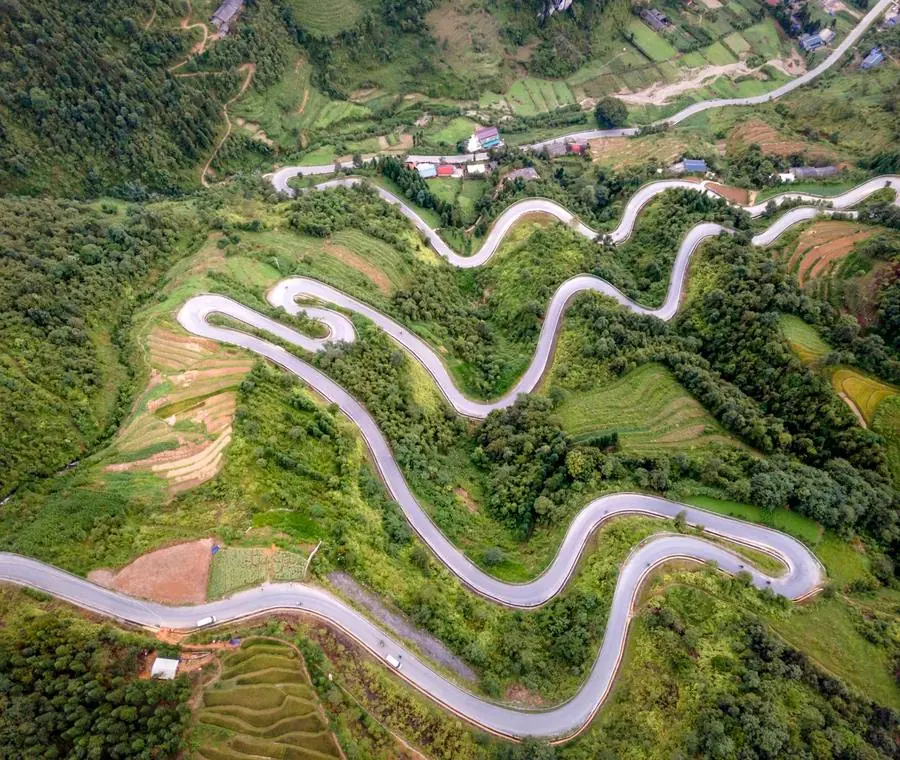
A ridge averaging about 1,200 metres, settled by Kuomintang soldiers of the 93rd Division who were left on the Thai side of the border. Between 15 and 20°C most of the year, and 4 to 6°C in December and January.
 Tourism Directory →
Ministry of Tourism & Sports · Ministry of Tourism & Sports, Thailand 1h 20m · 66 km - 3
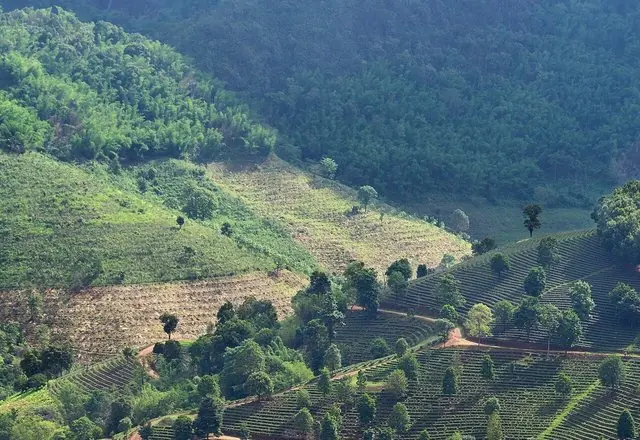
The tea plantations
Terraced oolong on the slopes below the town, with tasting rooms that will happily keep you for an hour.
Terraces of oolong and green tea on the hills, most of it grown from Taiwanese stock brought by the Yunnanese families who settled these ridges. The estates have tasting rooms and will walk you through the rows; the view over the terraces is the other half of the visit.
 Wikimedia Commons →
Takeaway · CC BY-SA 3.0 56 min · 36 km - 4
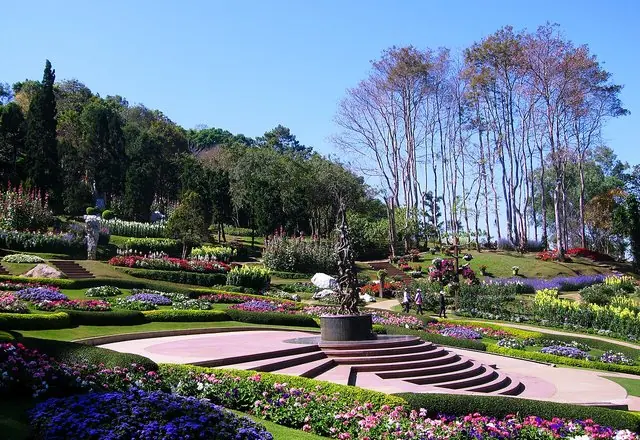
Doi Tung Royal Villa & Mae Fah Luang Garden
A Swiss-chalet-influenced royal residence and a formal garden on the ridge, built as the centrepiece of a crop-substitution project that reforested this whole mountain.
The late Princess Mother's home on Doi Tung, a house of teak and pine that mixes Swiss chalet with Lanna, and the flower garden laid out below it. Both belong to the Doi Tung project that replaced opium on these hills with coffee, macadamia and crafts.
 Wikipedia →
::::=UT=:::: · CC BY-SA 3.0 29 min · 21 km - 5
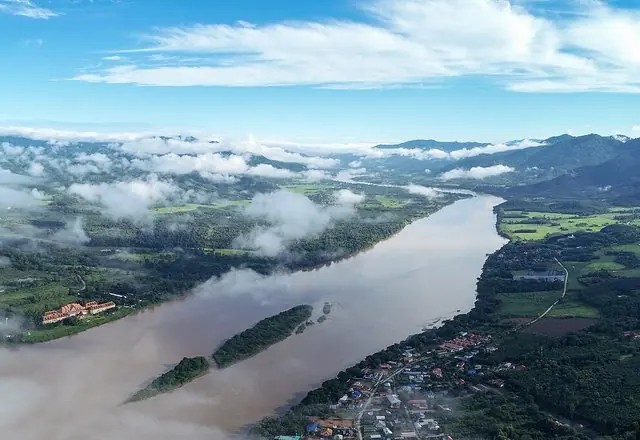
Golden Triangle (Sop Ruak)
The confluence where the borders meet. The viewpoint is touristy; the Hall of Opium museum nearby is genuinely good and explains why every royal project on this route exists.
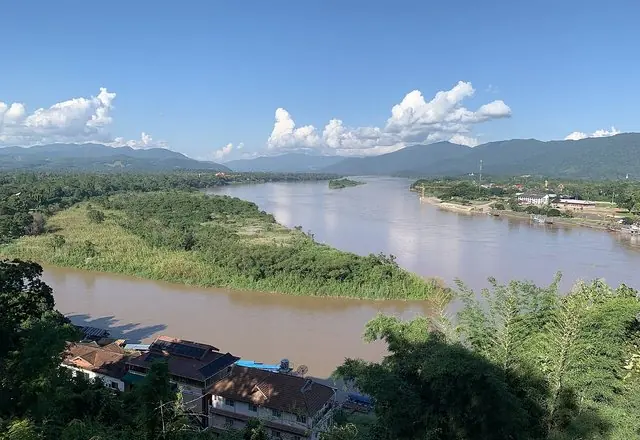
Where the Ruak river meets the Mekong and Thailand, Laos and Myanmar face each other across the water. The name comes from the opium trade of the last century; today it is a viewpoint, a large golden Buddha on a boat, and the Hall of Opium, a museum much better than it sounds.
 Wikipedia →
SaiLp · CC BY-SA 4.0 55 min · 50 km - 6
Chiang Saen
Riverside ruins of a much older kingdom, quiet and largely unvisited, right on the Mekong.
An old walled town on the Mekong, once a Lanna capital, with brick chedis and temple ruins scattered through it and along the riverbank. Laos is on the far side of the water, and the town is the quiet way to meet the river before the Golden Triangle.
 Wikipedia →
Chainwit · CC BY-SA 4.0 14 min · 10 km

Best time to go
November to February, when the ridges are clear and Mae Salong is cold enough for the tea houses to make sense. Cherry blossom along the Mae Salong road in late December and January. The green season is atmospheric but the ridge is often in cloud.
Before you set off
Three days minimum; two is a rush. You will be close to the Myanmar and Laos borders throughout — carry your passport and expect checkpoints. Fuel up before the ridge road to Mae Salong. Cash is more useful than cards in the villages. Buying tea directly from the growers is the point of coming; the roadside places nearer the highway are not the same product.